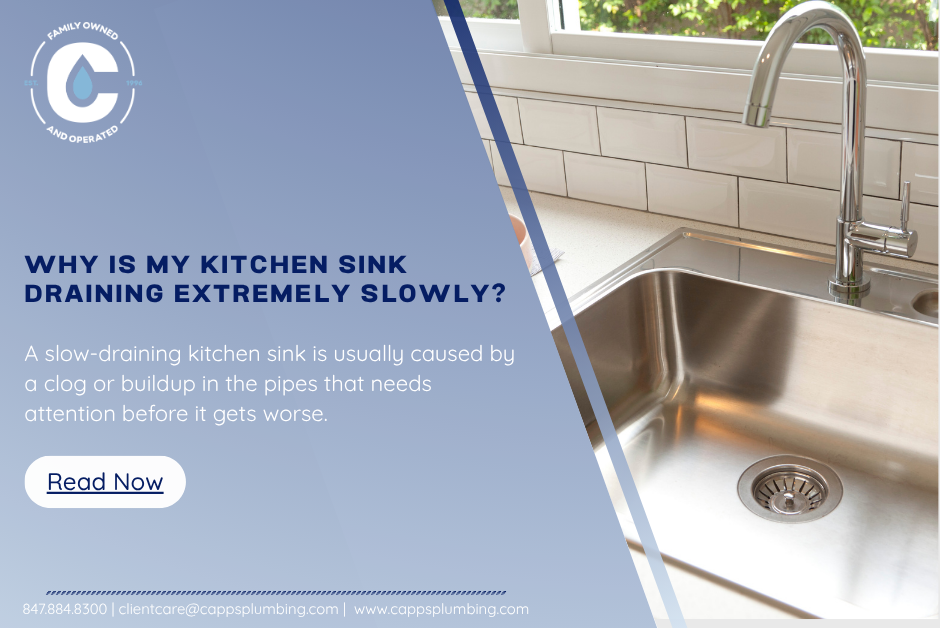
A kitchen sink that drains extremely slowly is almost always caused by a partial clog in the drain line, a buildup of grease and food debris, or a blockage deeper in the pipe. It will not fix itself. The longer you wait, the worse it gets, and what starts as a slow drain can turn into a full backup.
A homeowner in Deerfield, IL recently called us with exactly this problem. Their kitchen sink had slowed to a near standstill, and they wanted it resolved as quickly as possible. It is one of the most common calls we get, and it is almost never just a minor inconvenience.
At Capps Plumbing and Sewer Inc., we have been handling drain issues like this for 30 years. We know how to find the problem fast and fix it the right way. Here is what you need to know.
What Causes a Kitchen Sink to Drain So Slow?
The most common cause of a slow-draining kitchen sink is a grease and food buildup that has narrowed the inside of your drain pipe over time. Every time you rinse a greasy pan or let food scraps slide down the drain, a small amount of residue clings to the pipe walls. Over months and years, that residue builds up into a thick, sticky blockage.
Here are the most frequent culprits:
- Grease and fat buildup from cooking oils, butter, and meat drippings that cool and solidify inside the pipe
- Food debris such as coffee grounds, pasta, rice, and vegetable peels, that accumulate near the drain trap
- Soap scum that bonds with minerals in hard water and creates a semi-solid coating on pipe walls
- A clogged P-trap, the curved section of pipe directly under your sink that catches debris before it travels further into the system
- A deeper line blockage further down the drain line, sometimes caused by root intrusion or a buildup in the main sewer line
If only your kitchen sink is slow, the clog is likely close to that fixture. If multiple drains in your home are sluggish, the problem may be further down the line.
Is a Slow Kitchen Drain Something You Can Fix Yourself?
In some cases, a minor clog near the drain opening can be cleared with a plunger or by cleaning out the P-trap, but most slow-drain situations require professional drain clearing equipment to fully resolve. Store-bought liquid drain cleaners are not a reliable fix. They rarely reach deep clogs, and the harsh chemicals can damage older pipes over time.
Here is what you can try before calling a plumber:
- Use a sink plunger with a firm, steady plunging motion for 30 to 60 seconds
- Remove and manually clean the P-trap if you are comfortable doing so, but have a bucket ready because water will spill out
- Flush the drain with boiling water to soften any grease near the opening
If none of those steps make a noticeable difference, stop. You are dealing with a deeper clog that needs professional equipment. Continuing to pour chemicals down the drain or using a drain snake incorrectly can push the blockage further down or damage the pipe.
What Happens If You Ignore a Slow-Draining Kitchen Sink?
Ignoring a slow drain almost always leads to a complete backup, which is significantly more disruptive and expensive to deal with than a partial clog. A sink that takes five minutes to drain today could be fully blocked next week.
Beyond the inconvenience, there are real risks to letting it go:
- Standing water in the sink becomes a breeding ground for bacteria and mold
- Pressure from a growing blockage can stress pipe joints and connections
- A full backup can cause water to overflow and damage cabinets, flooring, and the area under your sink
- If the clog is deep in the line, a slow drain in the kitchen could be a warning sign of a larger sewer line issue
The homeowner who called us was right to treat it as urgent. A slow drain is not a problem to put off until it becomes a crisis.
When Should You Call a Plumber for a Slow Kitchen Drain?
You should call a plumber if the drain has not improved after basic DIY attempts, if the slow draining is accompanied by gurgling sounds or odors, or if other drains in the home are also slow. These are signs that the clog is either deep in your drain line or affecting multiple fixtures.
You should also call right away if:
- Water is backing up into the sink when you run the dishwasher
- You notice a sewage smell coming from the drain
- The sink has gone from slow to completely stopped
- You have already tried a plunger and cleaning the P-trap without improvement
Professional drain clearing uses motorized rodding equipment to physically break up and remove blockages rather than just masking them. It is faster, safer, and more effective than any over-the-counter solution. Our residential plumbing services include drain clearing as one of our core specialties, and our team is equipped to handle everything from a simple kitchen clog to a full sewer line obstruction.
How Much Does It Cost to Have a Plumber Clear a Slow Kitchen Drain?
The cost to clear a slow kitchen drain varies depending on where the clog is located and how severe it is, but most standard drain clearing services are priced by the job rather than by the hour. You should always know the price before any work begins.
At Capps Plumbing, we charge a $78 service call fee that covers the initial visit and a visual diagnosis. That fee is waived when you complete a repair with us. We believe in upfront pricing, which means no surprises when the job is done. If you want to know what to expect before we arrive, just ask. We are happy to walk you through it.
How Can You Prevent Your Kitchen Sink From Draining Slowly Again?
The best way to prevent a slow kitchen drain is to change a few small daily habits that keep grease and debris out of your pipes in the first place. Most kitchen drain clogs are completely preventable.
- Never pour cooking oil, grease, or fat down the drain. Let it cool and dispose of it in the trash.
- Use a sink strainer to catch food particles before they enter the drain
- Run hot water down the drain for 30 seconds after washing greasy dishes
- Avoid putting starchy foods like pasta, rice, or potato peels down the drain,, even if you have a garbage disposal
- Schedule a periodic professional drain cleaning, especially if your home has older pipes
A little prevention goes a long way. And if you want peace of mind year-round, our Capps Advantage Plus membership includes an annual plumbing inspection that can catch slow-drain issues before they become emergencies.
Get Your Kitchen Drain Flowing Again
A slow kitchen sink is not something to live with or wait on. If it is already draining at a crawl, it is only a matter of time before it stops completely. The good news is that it is one of the most straightforward problems we fix every single day.
Capps Plumbing and Sewer Inc. has been serving homeowners across the Deerfield, Illinois area for 30 years. We offer free estimates, upfront pricing, and a team of experienced technicians who know how to get the job done right the first time. Whether it is a simple kitchen clog or something deeper in your drain line, we are ready to help.
Schedule your service today and let us take it from here.