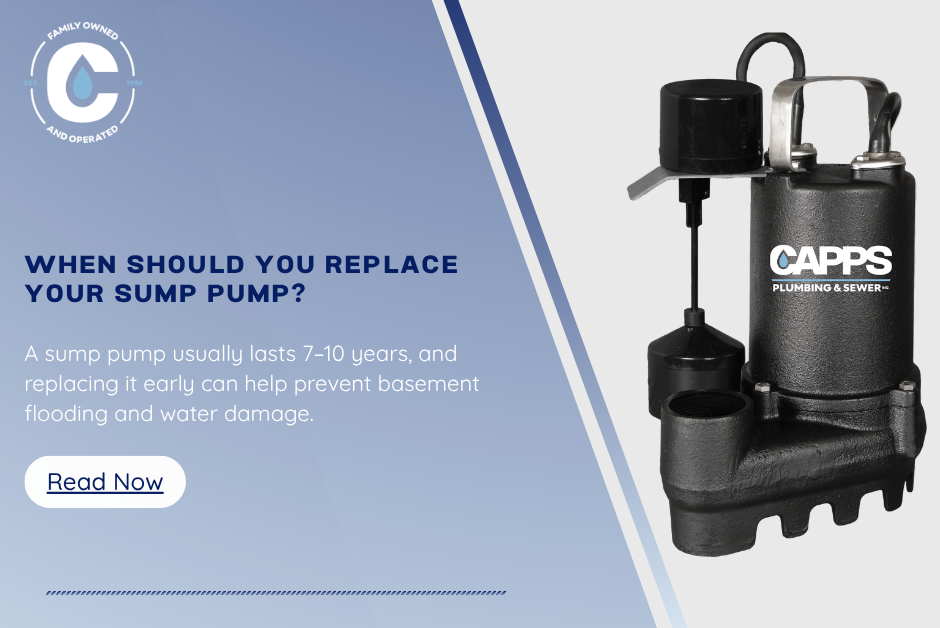
A sump pump is one of the most important systems protecting your Highland Park, IL home from basement flooding and water damage. Many homeowners do not think about their sump pump until there is a heavy storm, rising groundwater, or standing water in the basement. Knowing when to replace your sump pump can help you avoid costly repairs and protect your home before a failure happens.
How Long Does a Sump Pump Typically Last?
Most sump pumps last between 7 and 10 years depending on usage, maintenance, and the quality of the system. Homes with high groundwater levels or frequent storms may put more strain on the pump, causing it to wear out faster. According to the U.S. Department of Housing and Urban Development, sump pumps should be regularly tested and maintained to help reduce the risk of water intrusion and basement flooding.
Even if your sump pump still appears to work, aging components can become less reliable over time. Replacing an older unit before it fails completely is often the safest option.
What Are the Signs You Should Replace Your Sump Pump?
Your Sump Pump Is More Than 7 to 10 Years Old. Age is one of the biggest indicators that replacement may be needed. Older pumps are more likely to fail unexpectedly, especially during major storms when you need them most.
The Pump Runs Constantly. If your sump pump seems to run nonstop, there could be a problem with the float switch, discharge line, or the pump itself. Constant cycling can overwork the motor and shorten the lifespan of the system.
Strange Noises or Vibrations. Grinding, rattling, or excessive vibration may indicate worn bearings, a damaged impeller, or motor problems. A properly functioning sump pump should operate relatively quietly.
Frequent Repairs. If you are repeatedly repairing the same sump pump, replacement is often more cost-effective in the long run. Older pumps can develop multiple failing components over time.
Basement Water or Moisture Problems. If water is collecting in the basement despite the sump pump running, the unit may no longer have enough power to keep up with water demand. This can increase the risk of mold growth, structural damage, and ruined belongings.
The Pump Cycles On and Off Irregularly. A sump pump that turns on and off too frequently may have a float switch problem or may be improperly sized for the home. Short cycling can wear down the motor quickly.
Should You Repair or Replace Your Sump Pump?
Minor issues like a stuck float switch, clogged discharge pipe, or power connection problem can sometimes be repaired if the sump pump is relatively new.
Replacement is often recommended when:
- The pump is nearing the end of its lifespan
- Repairs are becoming frequent
- The motor is failing
- The pump cannot keep up during storms
- The system lacks backup protection
Newer sump pump systems are often more energy-efficient and reliable than older models.
Why Do Sump Pumps Fail?
Several common issues can lead to sump pump failure:
Power Outages. Many sump pumps stop working during power outages unless they have a battery backup system. The Federal Emergency Management Agency recommends considering backup power solutions for flood protection systems.
Lack of Maintenance. Debris buildup, clogged lines, and neglected components can reduce performance and increase wear.
Overworked Pumps. Heavy rainfall and excessive groundwater can overwork undersized or aging pumps.
Switch Problems. Float switch malfunctions are one of the most common causes of sump pump failure.
How Can You Extend the Life of Your Sump Pump?
Test the Pump Regularly. Pour water into the sump pit occasionally to confirm the pump activates and drains properly.
Clean the Sump Pit. Removing dirt, gravel, and debris helps prevent clogs and strain on the pump.
Check the Discharge Line. Make sure the discharge pipe is clear and directing water away from your foundation.
Schedule Routine Inspections. Professional inspections can help identify worn components before they fail completely.
Frequently Asked Questions About Sump Pump Replacement
Can a sump pump fail without warning?
Yes. Some sump pumps stop working suddenly, especially older units or pumps that have not been maintained regularly.
Is it worth installing a battery backup sump pump?
Yes. Battery backup systems provide added protection during power outages and severe storms.
What size sump pump do I need?
The correct size depends on your basement size, groundwater conditions, and drainage system. A professional inspection can determine the right system for your home.
Can a failing sump pump cause mold problems?
Yes. Excess moisture and basement flooding can create conditions that encourage mold growth and indoor air quality issues.
Protect Your Basement With Professional Sump Pump Service
If your sump pump is showing signs of wear or nearing the end of its lifespan, it may be time for an inspection or replacement. At Capps Plumbing, we help homeowners in Highland Park, IL identify sump pump problems early and recommend reliable solutions to protect their homes from water damage. Contact us today to schedule a sump pump service.