A sewer line backup or freeze is one of the most stressful plumbing problems a homeowner can face. When wastewater starts coming up through toilets, tubs, or floor drains, it is more than an inconvenience. It is often a sign of a serious blockage or frozen sewer line that needs immediate attention to prevent property damage and health risks.
We regularly hear from homeowners dealing with sudden backups during cold weather, unsure whether the issue is a simple clog or something much bigger.
Recently, we spoke with a homeowner who noticed sewage backing up into multiple bathroom fixtures after several days of freezing temperatures, which helped confirm the issue was likely happening in the main sewer line rather than a single drain.
What Does It Mean When a Sewer Line Backs Up?
A sewer line backup happens when wastewater cannot flow out of your home through the main sewer pipe. Instead of draining away, it reverses direction and comes back up through the lowest fixtures in the house.
This is different from a localized clog. When multiple drains are affected at the same time, the problem is almost always in the main sewer line.
Can Sewer Lines Freeze in Winter?
Yes, sewer lines can freeze, especially during prolonged cold weather. This is more common in homes with shallow sewer lines, poor insulation, or existing buildup inside the pipe.
Freezing can occur when:
- Wastewater moves slowly through the line and has time to freeze
- Grease, debris, or sludge has already narrowed the pipe
- Sections of the sewer line are exposed or improperly buried
Once frozen, the line may be completely blocked, causing wastewater to back up into the home.
What Are the Warning Signs of a Frozen or Backed-Up Sewer Line?
Homeowners often notice several symptoms at once. Common signs include toilets backing up when flushed, water rising in bathtubs or showers, gurgling sounds from drains, and sewage odors inside the home. In winter, these symptoms often appear suddenly after temperatures drop.
If more than one fixture is affected, it is a strong indication that the main sewer line is involved.
What Should You Do Immediately If This Happens?
The first step is to stop using all the water in the home. Continuing to flush toilets or run sinks can make the backup worse and increase the risk of flooding.
Avoid using chemical drain cleaners, as they will not clear a frozen or main line blockage and can damage pipes. Do not attempt to thaw sewer lines with open flames or DIY heating methods, as this can crack pipes and create safety hazards.
At this point, contacting a professional plumber is essential. Specialized equipment is often required to safely clear ice, grease, and debris from a sewer line.
How Are Frozen or Backed-Up Sewer Lines Typically Cleared?
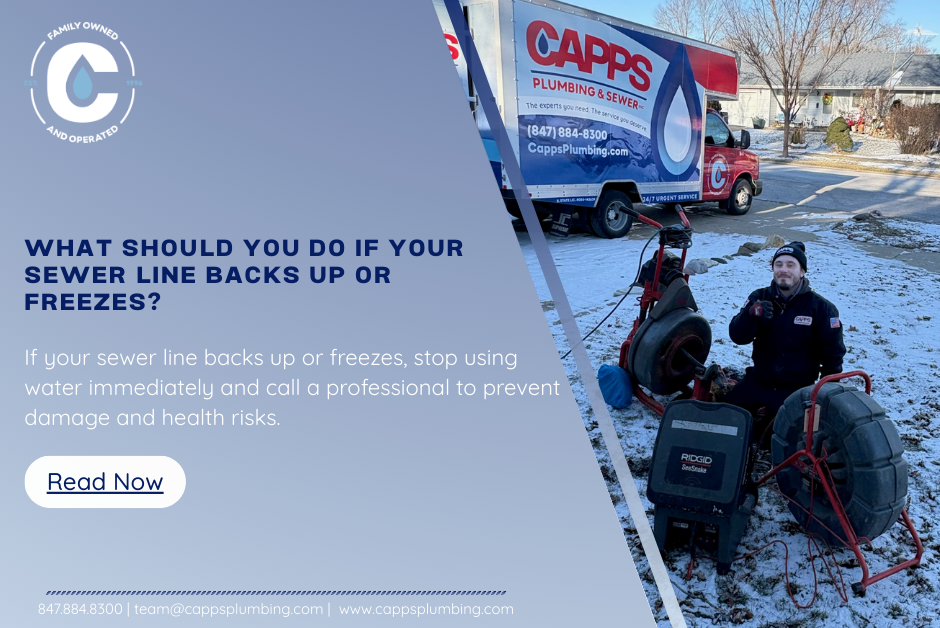
Depending on the cause, sewer line issues may be resolved using professional drain clearing tools, mechanical cleaning, or hot water jetting. Hot water jetting is commonly used to safely melt ice and remove hardened buildup without damaging the pipe.
In some cases, a camera inspection is needed to confirm the condition of the sewer line and identify contributing issues such as root intrusion or pipe damage.
Can Sewer Line Backups Be Prevented?
While not all sewer problems are avoidable, homeowners can reduce their risk with proper maintenance. Avoid pouring grease or food waste down drains, address slow drains early, and schedule periodic sewer inspections. In colder climates, insulating exposed plumbing and ensuring sewer lines are properly buried can also help prevent freezing.
Early action is key. Minor drainage issues are much easier and less costly to resolve before they turn into emergencies.
Frequently Asked Questions
Is a sewer backup considered an emergency?
Yes. Sewer backups pose health risks and can cause significant damage to flooring, walls, and fixtures. They should be addressed as soon as possible.
Will a plunger fix a sewer line backup?
A plunger may help with a single clogged fixture, but it will not resolve a main sewer line blockage or frozen pipe.
How do I know if the problem is in my home or the sewer line?
If multiple fixtures are backing up at once, the issue is almost always in the main sewer line rather than individual drains.
Can cold weather alone cause a sewer backup?
Cold weather can contribute to sewer backups, especially if the line already has buildup or poor drainage. Freezing temperatures often turn existing problems into emergencies.
When to Call for Professional Help
If you notice sewage backing up, multiple drains are affected, or you have ongoing issues home during freezing weather, it is time to call a professional. Sewer line problems rarely resolve on their own and often worsen if left untreated.
Capps Plumbing & Sewer help homeowners diagnose sewer line issues, identify the root cause, and restore proper drainage safely and effectively. If you are dealing with a sewer backup or suspect frozen sewer pipes in Schaumburg, IL, contact us today to request an estimate or schedule your service..