When underground pipes or utility lines need repair or replacement, many homeowners in Barrington, IL are surprised to learn that there is more than one way to access them. The two most common approaches are trenchless excavation and traditional excavation. Understanding how these methods work can help you make a more informed decision if your sewer line, water line, or other underground system needs attention.
What Is Traditional Excavation?
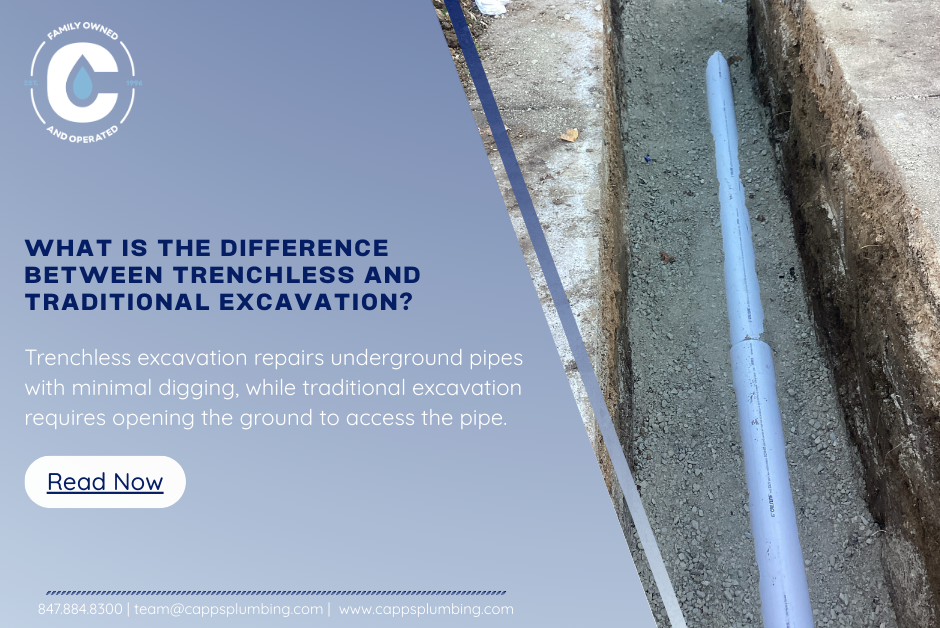
Traditional excavation is the method most people picture when they think about underground repairs. It involves digging a trench along the entire length of the pipe or utility line so technicians can access the system directly.
How does traditional excavation work?
With this method, we use heavy equipment such as excavators or backhoes to expose the pipe. Once the line is fully accessible, repairs or replacements can be performed directly.
Traditional excavation is often used for:
- Installing new sewer or water lines
- Replacing severely damaged or collapsed pipes
- Major construction or development projects
- Situations where the pipe system needs full exposure
Because the pipe is fully uncovered, this approach allows for complete visibility of the problem and surrounding infrastructure.
What are the advantages of traditional excavation?
Traditional excavation offers several benefits:
- Full access to the entire pipe system
- Ability to replace entire sections of pipe
- Works for nearly all types of damage or pipe failures
- Suitable for new installations
However, it also requires significant digging, which can impact landscaping, driveways, sidewalks, or patios.
What Is Trenchless Excavation?
Trenchless excavation is a modern technique that allows contractors to repair or replace underground pipes with minimal digging. Instead of excavating the entire pipe path, we create small access points and use specialized equipment to complete the work underground.
How does trenchless excavation work?
There are two common trenchless methods used in pipe repair:
Pipe Lining (Cured-in-Place Pipe)
A flexible liner coated with resin is inserted into the damaged pipe. Once in place, the liner hardens and forms a new pipe within the old pipe.
Pipe Bursting
A new pipe is pulled through the existing one while a specialized tool breaks apart the old pipe. This method replaces the pipe without needing to dig a full trench.
These techniques allow us to repair underground pipes while disturbing only small sections of the property.
What are the advantages of trenchless excavation?
Trenchless excavation is popular for several reasons:
- Minimal disruption to landscaping and hardscapes
- Faster project completion in many cases
- Reduced need for property restoration
- Less impact on driveways, patios, or sidewalks
However, trenchless methods are not always suitable if the pipe has completely collapsed or if the surrounding soil conditions require full access.
When Is Trenchless Excavation the Better Option?
Trenchless excavation may be the right solution if:
- The pipe is damaged but still structurally stable
- You want to protect landscaping, driveways, or patios
- The repair needs to be completed with minimal surface disruption
- Access to the pipe is possible through small entry points
In many residential sewer repairs, trenchless methods allow homeowners to avoid extensive digging while still restoring the system.
When Is Traditional Excavation Necessary?
Traditional excavation is usually recommended when:
- The pipe has collapsed or is severely misaligned
- Multiple sections of pipe require replacement
- New underground utilities are being installed
- Soil conditions or pipe layout make trenchless methods impractical
In these situations, full excavation provides the access needed to repair or replace the system safely.
How Do Contractors Decide Which Excavation Method to Use?
Before recommending a repair approach, we typically begin with an inspection of the underground system, often using specialized camera equipment to evaluate the pipe’s condition.
This inspection helps determine:
- The extent of the damage
- The pipe material and age
- Whether the pipe structure can support trenchless repair
- The best long term solution for the system
By understanding these factors, we can recommend the method that balances durability, efficiency, and minimal disruption.
Is Trenchless Excavation Always More Expensive?
Not necessarily. While trenchless technology sometimes has a higher upfront equipment cost, traditional excavation can involve additional expenses related to property restoration, such as replacing landscaping, concrete, or pavement.
In many cases, trenchless repair can reduce overall project costs by limiting the need for major restoration work.
Schedule Your Excavation Services Today
If you’re experiencing problems with a sewer line, water line, or another underground system in Barrington, IL, the best first step is a professional inspection. Capps Plumbing & Sewer evaluates the condition of your pipes and determine whether trenchless excavation or traditional excavation is the right solution for your property.
Contact us today to schedule your service, and we’ll help you find the most effective and least disruptive way to restore your underground system.